




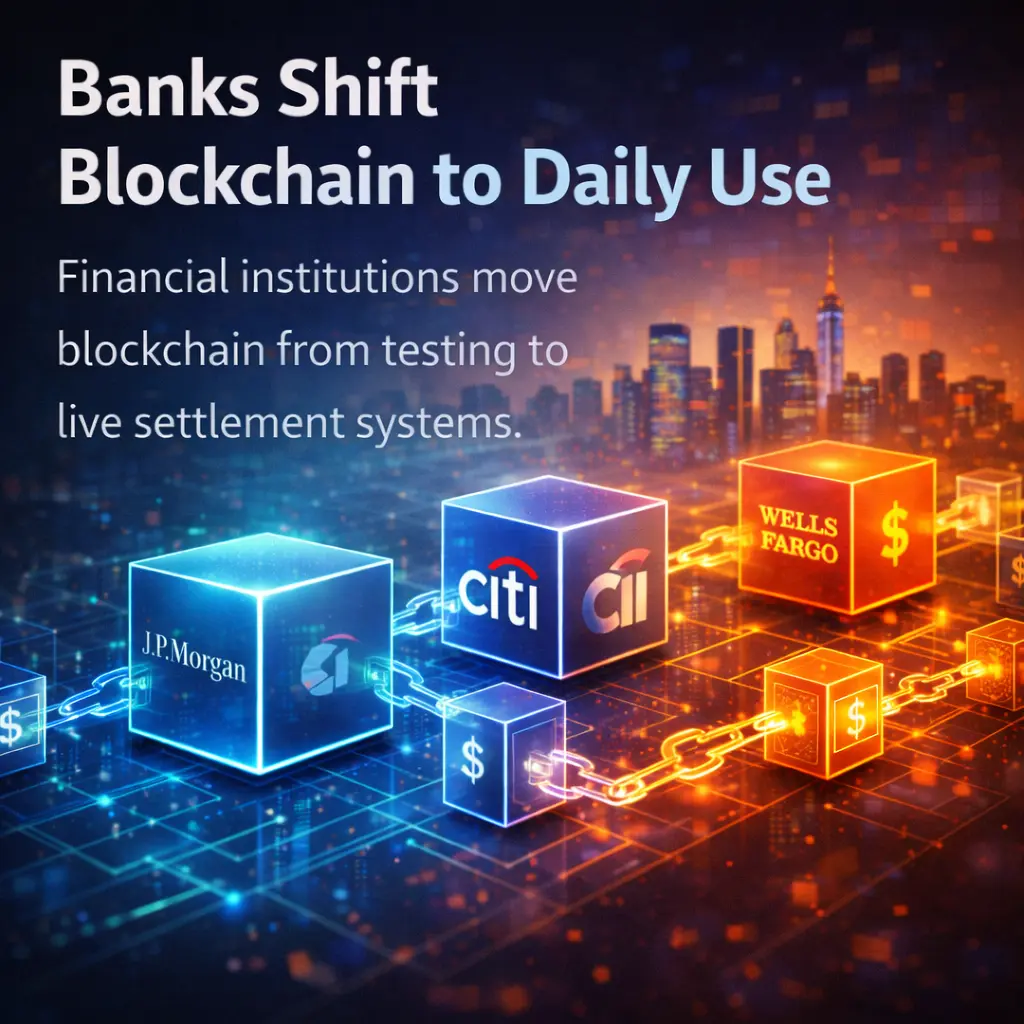
Banks and financial institutions are rapidly moving blockchain technology from pilot programs into live, day-to-day settlement operations, marking a major shift in how money and assets are transferred across global financial systems. What was once experimental is now becoming core infrastructure for payments, securities settlement, and liquidity management.
From Pilot Projects to Production Systems
For years, banks tested blockchain in controlled environments. Today, that phase is ending.
Major institutions are now using blockchain to:
- Settle transactions in real time
- Reduce reconciliation delays
- Improve transparency across counterparties
- Lower operational and compliance costs
Live deployment signals growing confidence in blockchain’s reliability and scalability.
Why Banks Are Making the Shift Now
Several forces are accelerating adoption:
- Pressure to shorten settlement cycles
- Rising costs of legacy infrastructure
- Demand for 24/7 payment availability
- Maturity of permissioned blockchain platforms
Blockchain enables near-instant settlement, reducing counterparty risk and freeing up capital previously locked in multi-day clearing cycles.
Stablecoins and Tokenized Assets Drive Usage
A key driver of daily blockchain usage is the rise of stablecoins and tokenized financial instruments.
Banks are increasingly using:
- Stablecoins for internal fund transfers
- Tokenized bonds and treasuries for settlement
- On-chain collateral for repo and margin management
These assets move on blockchain rails while remaining fully compliant with existing regulations.
Permissioned Networks Take Center Stage
Financial institutions are favoring permissioned blockchain networks over public systems.
These networks offer:
- Controlled access and identity verification
- Privacy-preserving transaction data
- Regulatory oversight and auditability
- Integration with existing banking systems
This design allows blockchain benefits without sacrificing compliance.
Operational Benefits Become Measurable
Banks already using live blockchain settlement report:
- Faster transaction completion
- Fewer settlement failures
- Reduced manual processing
- Improved reporting accuracy
In some cases, settlement timelines have dropped from days to minutes.
Global Adoption Expands
Blockchain settlement is gaining traction across regions:
- U.S. banks modernizing securities infrastructure
- European institutions using blockchain for cross-border payments
- Asian banks deploying tokenized asset platforms
As standards mature, interoperability between networks is improving.
Challenges Still Remain
Despite progress, obstacles persist:
- Integration with legacy core banking systems
- Cross-border regulatory coordination
- Cybersecurity and resilience requirements
- Staff training and operational change management
Banks are addressing these issues through phased rollouts and hybrid models.
What This Means for the Future of Finance
Blockchain’s transition into daily banking use suggests a permanent structural change.
Instead of replacing banks, blockchain is becoming the settlement layer beneath traditional finance, quietly improving speed, transparency, and efficiency.
The shift from testing to live blockchain settlement marks a turning point for financial institutions. As banks embed blockchain into everyday operations, the technology is no longer experimental—it is becoming foundational infrastructure for the modern financial system.