



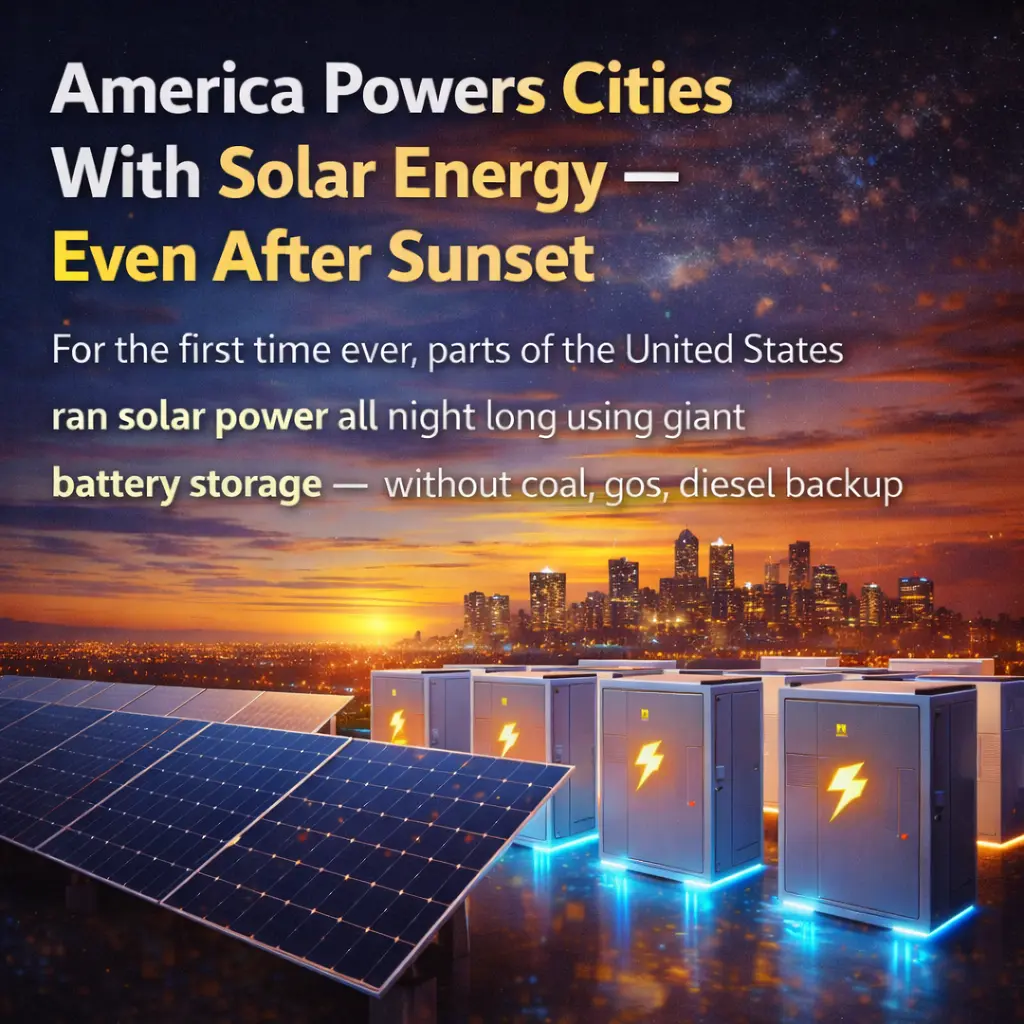
For the first time in history, parts of the United States have successfully powered cities through the night using solar energy, made possible by massive grid-scale battery storage systems. The milestone proves that solar power—once limited to daylight hours—can now deliver reliable electricity without coal, gas, or diesel backup.
How Solar Power Ran All Night
During peak daylight hours, large solar farms generated surplus electricity. Instead of wasting that excess energy, it was stored in utility-scale battery systems and later discharged after sunset to meet nighttime demand.
This marks a major shift in how renewable energy supports the power grid:
- Solar generates during the day
- Batteries store excess power
- Stored energy supplies homes and businesses overnight
No fossil fuel plants were needed as backup during these periods.
Battery Storage Is the Game-Changer
The breakthrough was enabled by rapidly expanding battery infrastructure, especially lithium-ion grid batteries capable of storing hundreds of megawatt-hours (MWh) of energy.
In regions like California, battery storage capacity has grown so large that it now rivals traditional gas peaker plants during evening hours.
Key performance facts:
- Grid batteries can discharge power for 4–8+ hours
- Instant response time improves grid stability
- Zero emissions during operation
This allows renewable energy to function as baseload power, not just supplemental energy.
Where This Is Happening
California led the overnight solar achievement, but other U.S. states are quickly following:
- Texas expanding solar-plus-storage projects
- Arizona deploying batteries for peak demand
- Nevada using storage to stabilize desert solar output
Together, these states are proving renewables can power large populations around the clock.
Why This Is a Historic Energy Moment
Traditionally, critics argued solar could never replace fossil fuels because “the sun doesn’t shine at night.” This milestone directly disproves that claim.
Benefits include:
- Reduced carbon emissions
- Lower dependence on imported fuels
- Improved air quality
- Greater energy independence
It also reduces strain on aging gas and coal infrastructure.
Economic Impact
Battery prices have fallen sharply over the past decade, making overnight solar economically competitive. Utilities increasingly find that:
- Solar + storage is cheaper than building new gas plants
- Maintenance costs are lower
- Long-term price stability improves
This is accelerating investment across the energy sector.
What Comes Next
Energy planners expect:
- Longer-duration batteries (10–24 hours)
- Expansion into colder and cloudier regions
- Integration with wind and nuclear power
As battery technology improves, 24/7 renewable grids become increasingly realistic.
America’s ability to power cities with solar energy even after sunset represents a turning point in clean energy history. By pairing solar generation with large-scale battery storage, the U.S. has demonstrated that renewable energy can deliver reliable, fossil-free electricity around the clock—reshaping the future of power generation.